
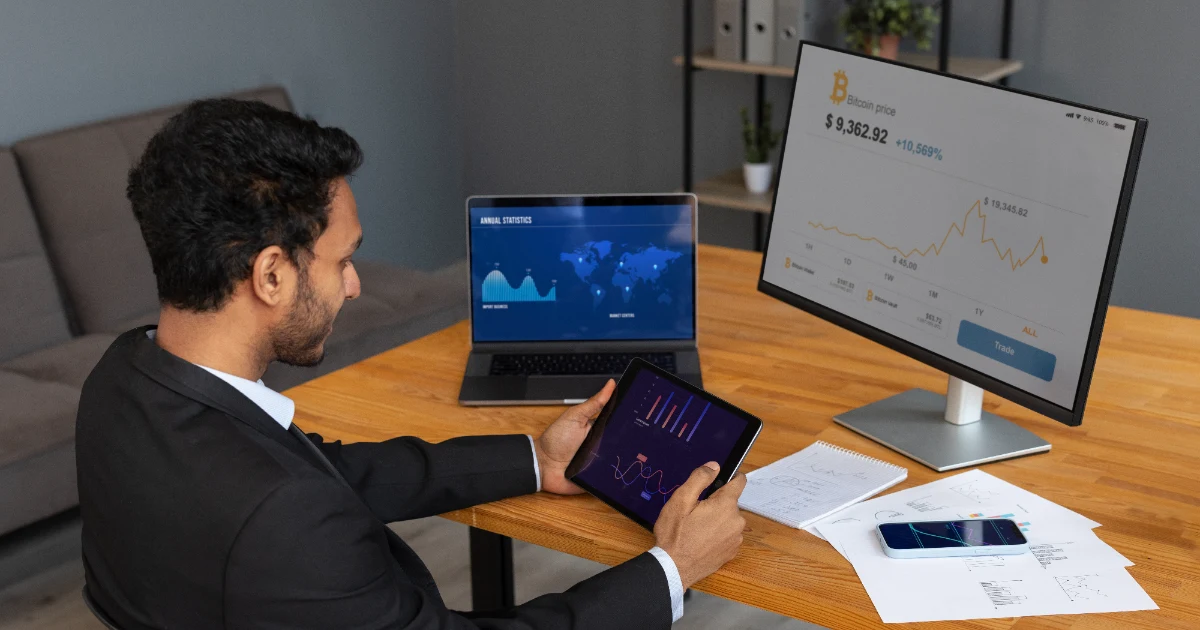
Crypto Income for Islamic Home Finance may be considered in certain circumstances, but earning money through cryptocurrency does not automatically guarantee eligibility for Islamic home finance in the UAE. Lenders may assess the source, stability, documentation, and consistency of your crypto earnings before determining whether they can be considered during the financing application.
For applicants seeking Islamic home finance in the UAE, the key issues are usually the source of income, consistency of earnings, documentation, affordability, and the financial institution’s own eligibility criteria.
So, can crypto income qualify for Islamic home finance? Potentially, but it depends on how the income is generated, how it can be verified, and whether the lender considers it sufficiently stable and acceptable for its affordability assessment.
What Is Crypto Income?
Crypto income can come from several different activities, including:
- Cryptocurrency trading
- Long-term investment gains
- Staking rewards
- Mining
- Receiving cryptocurrency for business or freelance services
- Operating a crypto-related business
- Selling digital assets for a profit
These sources are not necessarily treated in the same way during a home finance application.
For example, someone who occasionally sells cryptocurrency at a profit may have difficulty demonstrating predictable monthly income. In contrast, a self-employed professional who receives regular payments for documented services and maintains clear financial records may have a different type of application.
Does Owning Cryptocurrency Count as Income?
Not necessarily.
There is an important difference between wealth and income.
Suppose you own cryptocurrency worth AED 1 million. That demonstrates that you have an asset, but it does not necessarily demonstrate AED 1 million of annual income.
A lender assessing home finance generally needs to understand your ability to meet regular financing payments. UAE Central Bank rules require financial institutions to assess repayment capacity and consider reliable income when assessing affordability. Variable income may be assessed conservatively, while one-off windfalls can be excluded. (Central Bank Rulebook)
This means a large crypto portfolio may be relevant to your overall financial position without automatically being accepted as regular qualifying income.
How Might an Islamic Finance Provider Assess Crypto Earnings?
The exact approach depends on the financial institution and your circumstances. However, applicants should be prepared for questions about the following areas.
1. Source of the Cryptocurrency Income
The provider may want to understand exactly where the funds came from.
For example:
- Was the crypto purchased using salary savings?
- Did you receive crypto as payment for professional services?
- Did the income come from trading?
- Was it generated through mining or staking?
- Is the activity connected to a registered business?
Clear documentation can make it easier to demonstrate the origin of the funds.
2. Consistency of Income
Crypto markets can experience significant price fluctuations. Because of this, a lender may distinguish between regular earnings and occasional investment gains.
The UAE Central Bank’s responsible-financing standards state that variable income should be assessed based on its variability and that only a prudent portion of average variable income may be included. One-off variable income, such as windfall gains, should be excluded from income assessment. (Central Bank Rulebook)
Therefore, occasional cryptocurrency profits may not be treated in the same way as stable employment income.
3. Bank Statements and Financial Records
Documentation is particularly important for applicants whose income does not come from a traditional salary.
Depending on the circumstances, you may need records such as:
- Personal or business bank statements
- Cryptocurrency exchange statements
- Trading transaction histories
- Tax or accounting records where applicable
- Business registration documents
- Invoices and contracts
- Evidence showing the source of funds
- Records of transfers between crypto platforms and bank accounts
The purpose is to create a clear financial trail showing where the money originated and how it became available to you.
4. Existing Financial Commitments
Your crypto earnings are only one part of the affordability assessment.
Financial institutions also consider existing liabilities and repayment obligations. The CBUAE requires lenders to assess consumers’ overall indebtedness and comply with applicable Debt Burden Ratio requirements. (Central Bank Rulebook)
Credit cards, personal finance, car finance, and other liabilities can therefore affect the amount of home finance you may qualify for.
What About Crypto Used for the Down Payment?
This is a separate question from whether crypto qualifies as income.
Imagine you own cryptocurrency worth AED 500,000 and want to use part of it toward the purchase of a home.
You may first need to convert the cryptocurrency into an accepted form of funds and demonstrate the source and movement of those funds.
The financial institution may want to establish:
- Where the cryptocurrency originally came from.
- How it was acquired.
- How it was sold or converted.
- Where the proceeds were transferred.
- Whether the transaction can be independently documented.
This is why keeping detailed records is important for anyone building significant wealth through digital assets.
Does Crypto Fit with Islamic Home Finance?
This question has two separate dimensions: the source of the applicant’s funds and the structure of the home financing itself.
Islamic home finance is designed around Shariah-compliant financing structures rather than conventional interest-based lending. The exact structure depends on the financial institution and product.
However, whether a particular cryptocurrency activity is Shariah-compliant is a separate religious and jurisprudential question. Different scholars and Islamic finance authorities may have different views regarding particular digital assets and activities.
Therefore, applicants who have concerns about the Shariah status of their cryptocurrency earnings should seek guidance from a qualified Shariah scholar or adviser familiar with cryptocurrency and Islamic finance.
Can Self-Employed Crypto Earners Apply?
Potentially, yes.
Being self-employed does not automatically prevent someone from applying for Islamic home finance. IslamicMortgage.ae’s current guidance notes that self-employed and freelance applicants may be assessed using documentation such as bank statements, contracts, professional or business documents, and financial records.
For someone earning through a crypto-related business, maintaining organized business and financial records can therefore be particularly important.
The lender may still assess:
- Stability of income
- Length of business activity
- Existing liabilities
- Credit history
- Residency status
- Property value
- Requested financing
- Down payment
- Evidence supporting the income
What Can Crypto Investors Do Before Applying?
If cryptocurrency represents a significant part of your finances, prepare your documentation before approaching an Islamic home finance provider.
Keep a Clear Transaction History
Maintain records from the exchanges and platforms you use. Avoid unexplained transfers between multiple wallets and accounts where possible.
Separate Personal and Business Finances
If your cryptocurrency income comes from a business, keeping business transactions separate from personal finances can make your financial position easier to understand.
Maintain Bank Records
Keep bank statements showing deposits and transfers associated with cryptocurrency transactions.
Document the Source of Wealth
If a large portion of your down payment comes from crypto investments, be prepared to demonstrate how the original funds were accumulated.
Ask the Provider Before Applying
Because policies can differ between financial institutions, ask whether your specific type of cryptocurrency income can be considered during the eligibility assessment.
Frequently Asked Questions
Can Bitcoin profits be used to qualify for Islamic home finance?
Possibly, but Bitcoin profits are not automatically treated as regular qualifying income. The financial institution may assess the consistency, source, documentation, and reliability of the income.
Can cryptocurrency be used for a home finance down payment?
Potentially, after conversion into an accepted form of funds and subject to the provider’s requirements. You may need to provide documentation demonstrating the source of the funds.
Does owning cryptocurrency prove that I can afford a mortgage?
No. Cryptocurrency holdings demonstrate ownership of an asset, but lenders generally need to assess sustainable income and repayment capacity as well.
Do Islamic banks accept crypto income?
There is no single rule that applies to every provider or every type of crypto income. Eligibility depends on the institution’s policies, the nature of the income, supporting documentation, and affordability assessment.
Is cryptocurrency Shariah-compliant?
There are differing scholarly views regarding cryptocurrencies and specific crypto activities. If Shariah compliance is important to your application, obtain advice from a qualified Shariah scholar who can assess your particular circumstances.
Final Thoughts
Crypto income may potentially support an Islamic home finance application in the UAE, but cryptocurrency wealth alone does not guarantee eligibility.
The most important factors are usually documented source of funds, income stability, financial records, existing liabilities, affordability, and the specific requirements of the Islamic finance provider.
If you earn through cryptocurrency, prepare a clear financial history before applying. This can help the provider understand your income and source of wealth and determine whether your circumstances meet its home-finance criteria.
For more information about eligibility and the Islamic home finance process in the UAE, explore the resources available on IslamicMortgage.ae.