
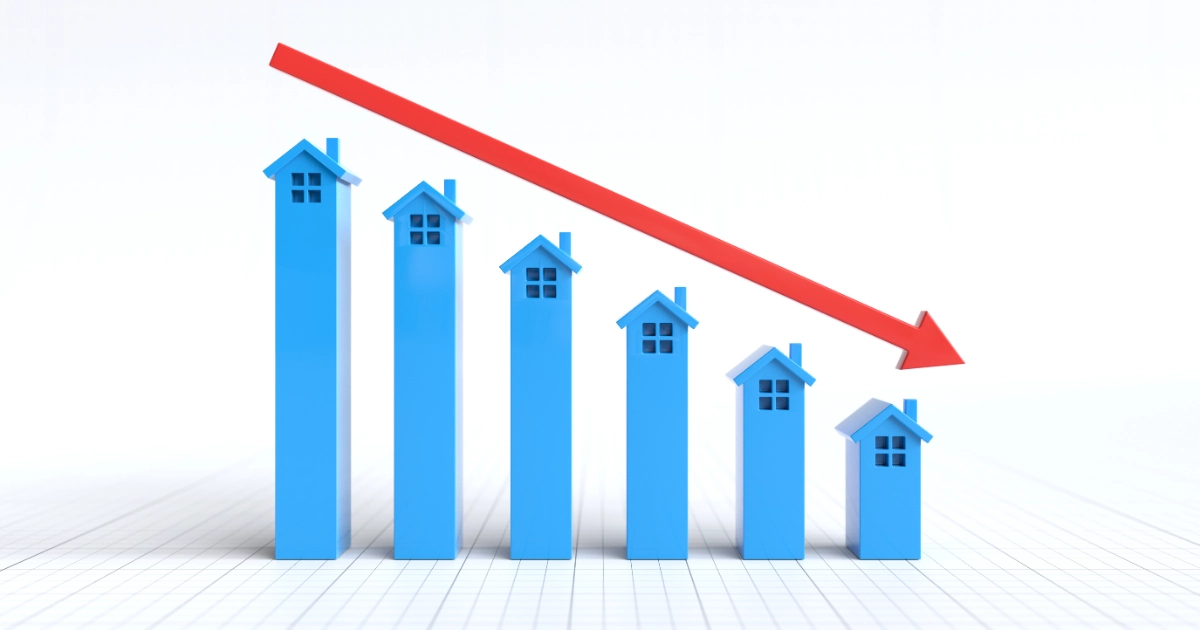
A property price drop home finance UAE applicants and homeowners should understand can affect property equity, new finance applications and refinancing options, but it does not automatically mean that existing monthly payments will change. The effect depends on whether you have already completed your purchase, are applying for Islamic home finance, or plan to refinance your property. Understanding these differences can help you make better decisions when property values fall.
The UAE property market can move differently across locations, property types and price ranges. Recent reporting in October 2026 described lower Dubai residential transaction activity and signs of price correction, highlighting why buyers should assess individual properties rather than assume every area is affected equally.
What Happens When Property Prices Fall in the UAE?
When property prices decline, a home may be worth less than it was when you purchased it. This can affect the amount of equity you hold in the property and the options available if you want to sell, refinance or apply for additional finance.
For example, imagine you purchased a property for AED 1,000,000. If its market value later falls to AED 900,000, the property has lost AED 100,000 in market value. Your outstanding home finance does not automatically fall by the same amount.
The difference between the property’s current value and the outstanding finance is commonly described as your equity, although the exact calculation and treatment depend on the transaction and any other claims against the property.
A fall in value does not necessarily create an immediate payment problem. The practical impact depends on your finance agreement, repayment history, current financial position and what you intend to do with the property.
Does a Property Price Drop Change Existing Islamic Home Finance Payments?
In general, a fall in the market value of a property does not automatically change the agreed instalments on an existing Islamic home finance arrangement. The payment obligations are governed by the signed finance documents and the structure of the agreement, not simply by changes in property prices.
For example, if your monthly instalment is affordable and you continue making payments according to your agreement, a market decline alone does not mean that the instalment will automatically increase or that you must immediately repay the difference in property value.
However, you should always review your specific contract and contact your finance provider if you receive a formal notice or have concerns about your obligations. Different Islamic banks may offer different Sharia-compliant structures, terms and conditions.
It is also important to distinguish a property-price decline from other events, such as missed payments, a request to restructure finance or an application for additional borrowing. Those situations may trigger separate assessments.
How Does a Property Price Drop Affect New Home Finance Applications?
A property price decline can be important when you are applying for Islamic home finance because the lender must assess the property’s value as part of its financing decision.
The Central Bank of the UAE’s mortgage regulations discuss property appraisal, loan-to-value limits and lenders’ responsibilities for assessing collateral and the applicant’s ability to repay.
If you are buying a property, the lender may arrange an independent valuation. The valuation may differ from the price agreed between you and the seller.
Example: When the valuation is lower than the purchase price
Suppose you agree to purchase a property for AED 1,000,000, but the bank’s accepted valuation is AED 900,000.
The bank may calculate the available finance using the valuation and its own lending criteria. If the amount it is willing to provide is lower than expected, you could need a larger personal contribution.
Possible next steps include:
- Asking the seller whether the purchase price can be renegotiated.
- Checking the lender’s final finance offer and valuation basis.
- Reviewing whether you have sufficient funds to cover the difference.
- Checking your purchase agreement before deciding whether to proceed.
Do not assume that a lower property valuation automatically results in rejection. The outcome depends on the lender’s policy, your affordability assessment, the property and the terms of your transaction.
Can Falling Property Prices Affect Refinancing?
Yes. A property price drop may make refinancing more difficult because the property’s current valuation can affect how much a new lender is willing to finance.
When you apply to refinance, the lender may reassess the property’s value, your outstanding finance, income, existing liabilities and repayment capacity. If the property is now worth less, the amount available under the lender’s loan-to-value criteria may be lower than you expected.
For example, you might have planned to refinance to obtain more favourable terms or access additional funds. If the property’s valuation has declined, you may have less flexibility to do so.
Before applying, ask the new provider how it will value the property and calculate the finance amount. Compare the complete costs and terms of the proposed arrangement rather than looking only at the advertised profit rate or monthly payment.
What Is the Relationship Between Property Value and Equity?
Property equity represents the value remaining after accounting for the outstanding finance and any other relevant claims.
A simple illustration:
| Situation | Property value | Outstanding finance |
|---|---|---|
| Before the price drop | AED 1,000,000 | AED 700,000 |
| After the price drop | AED 900,000 | AED 700,000 |
In this simplified example, the difference between the property value and outstanding finance decreases from AED 300,000 to AED 200,000.
This does not mean the homeowner automatically owes the lender an extra AED 100,000. It means the property’s market value has fallen while the outstanding finance remains unchanged in this example.
Lower equity can matter if you want to sell, refinance or use the property in another financial transaction. The actual outcome will depend on the sale price, settlement amount, applicable fees and your finance agreement.
Should You Delay Buying a Property if Prices Are Falling?
Not necessarily. A price decline may create opportunities for buyers, but it can also introduce uncertainty about future values. A lower asking price alone does not guarantee that a property is good value or that it will remain affordable.
Before committing to a property in the UAE, consider the following:
- Your long-term plans: Decide whether you intend to live in the property for several years or buy it mainly as an investment.
- Your budget: Check that your contribution, instalments and other ownership costs remain manageable.
- The property’s valuation: Research comparable properties and understand that the bank’s accepted valuation may differ from the seller’s asking price.
- The location and property type: Market conditions can vary between communities, apartments, villas and off-plan developments.
- Your financial reserve: Keep funds available for unexpected costs rather than committing every available dirham to the purchase.
If you are considering Sharia-compliant home finance, compare the structure, eligibility requirements, total cost and terms offered by the provider. Avoid basing your decision only on predictions about whether property prices will rise or fall.
What Should Existing Homeowners Do When Property Prices Fall?
If you already own a home with Islamic home finance, a market decline is a reason to review your position—not necessarily to panic or make an immediate change.
- Keep your payments on schedule. Follow the obligations in your signed agreement.
- Review your current position. Understand your outstanding finance and consider how a lower property value affects your equity.
- Avoid unnecessary borrowing. Do not assume that you can access additional finance based on a property’s previous value.
- Check the terms before refinancing or selling. Ask your provider for the settlement process, applicable costs and any required documents.
- Seek advice before making major decisions. If you are unsure about contractual obligations, speak to your finance provider and, where appropriate, a qualified legal or financial professional.
The key is to make decisions based on your actual circumstances rather than reacting to market headlines.
Does a Property Price Drop Affect Sharia-Compliant Home Finance Differently?
A property price decline does not, by itself, determine whether an Islamic home finance arrangement is Sharia-compliant. Sharia compliance depends on the structure and terms of the arrangement, while valuation is a separate part of assessing the property and the transaction.
Islamic finance providers may use different structures, such as Ijarah or other approved arrangements. The specific contract determines the parties’ obligations, so customers should not assume that every Islamic home finance product handles every situation in the same way.
If the property’s value falls, ask your provider how the change affects any proposed refinancing, sale, additional finance or restructuring. The answer should be based on the actual agreement and the lender’s applicable requirements.
Frequently Asked Questions
Does a property price drop affect home finance in the UAE?
It can affect property equity, new finance applications and refinancing options. For existing finance, a fall in market value does not automatically change the agreed instalments; the contract and circumstances remain important.
Can a bank increase my instalments because my property value falls?
A market decline alone does not automatically mean your instalments increase. Your payment obligations depend on the signed agreement and product structure. Review your contract and contact your provider if you receive a notice about changes to your payments.
Can I still sell my property if its value has dropped?
You can explore selling, but the sale proceeds may be insufficient to cover the outstanding finance and transaction costs. Ask your provider for the settlement amount and check the applicable sale and transfer requirements before committing.
Will a lower property valuation cause my Islamic home finance application to be rejected?
Not necessarily. It may reduce the finance amount the provider is prepared to offer or mean you need a larger contribution. The final decision depends on the property, your affordability and the provider’s criteria.
Is falling property value a reason to refinance?
Not on its own. Refinancing should be assessed by comparing the proposed terms, total costs, valuation, eligibility and your financial goals. Ask the provider to explain how the current property valuation affects the offer.
Should I wait for property prices to fall further before buying?
There is no guaranteed way to predict the market’s next move. Consider your budget, long-term housing needs, property quality and finance terms rather than relying only on a forecast.
Final Thoughts
A property price drop home finance UAE homeowners and buyers experience can affect equity, property valuations and future financing choices. However, it does not automatically mean that existing Islamic home finance instalments will change or that a homeowner must immediately pay the difference in market value.
If you are planning to buy, obtain clarity on the accepted valuation and the amount you may need to contribute. If you already own a property, keep up with your contractual payments and review your options carefully before selling or refinancing.
For anyone considering Islamic home finance in the UAE, understanding the property valuation, the finance agreement and the total cost of the transaction can help you make a more informed decision in a changing market.